The problem isn't a lack of clinical attention
It's assessing lipedema without a visual method that shows, precisely, what changed between one visit and the next.
Every assessment starts from scratch
Without a stable parameter, what you observed at the previous visit lives in notes and memory. Comparing two assessments becomes interpretation rather than measurement.
Hard to sustain a treatment decision
Holding or adjusting a treatment requires evidence of change. With no comparable data, the decision rests on perception alone — yours and your patient's.
Hard to show the patient
Your patient wants to know whether the treatment is working. Without a side-by-side comparison, that answer stays subjective — and adherence suffers.
Infrared imaging does not replace your clinical exam. It becomes the visual data point that was missing, so you can track lipedema progression with the same rigor you already apply to the rest of your practice.
The visual parameter that was missing
Standardized capture, objective comparison across dates, and a report your patient understands.
Standardized capture
A consistent acquisition protocol: same framing, same distance, same thermal conditions. That is what makes two visits genuinely comparable.
Regional thermal map
Temperature distribution recorded per region of interest — thighs, knees, calves and arms — at every assessment.
Visit-to-visit comparison
Place assessments side by side and see the thermal variation between dates. Change stops being an impression and becomes a recorded value.
Patient-facing report
A before-and-after visual document that communicates progression in language your patient understands.
What you see at every assessment
From staging to thermal variation, all recorded the same way at every visit.
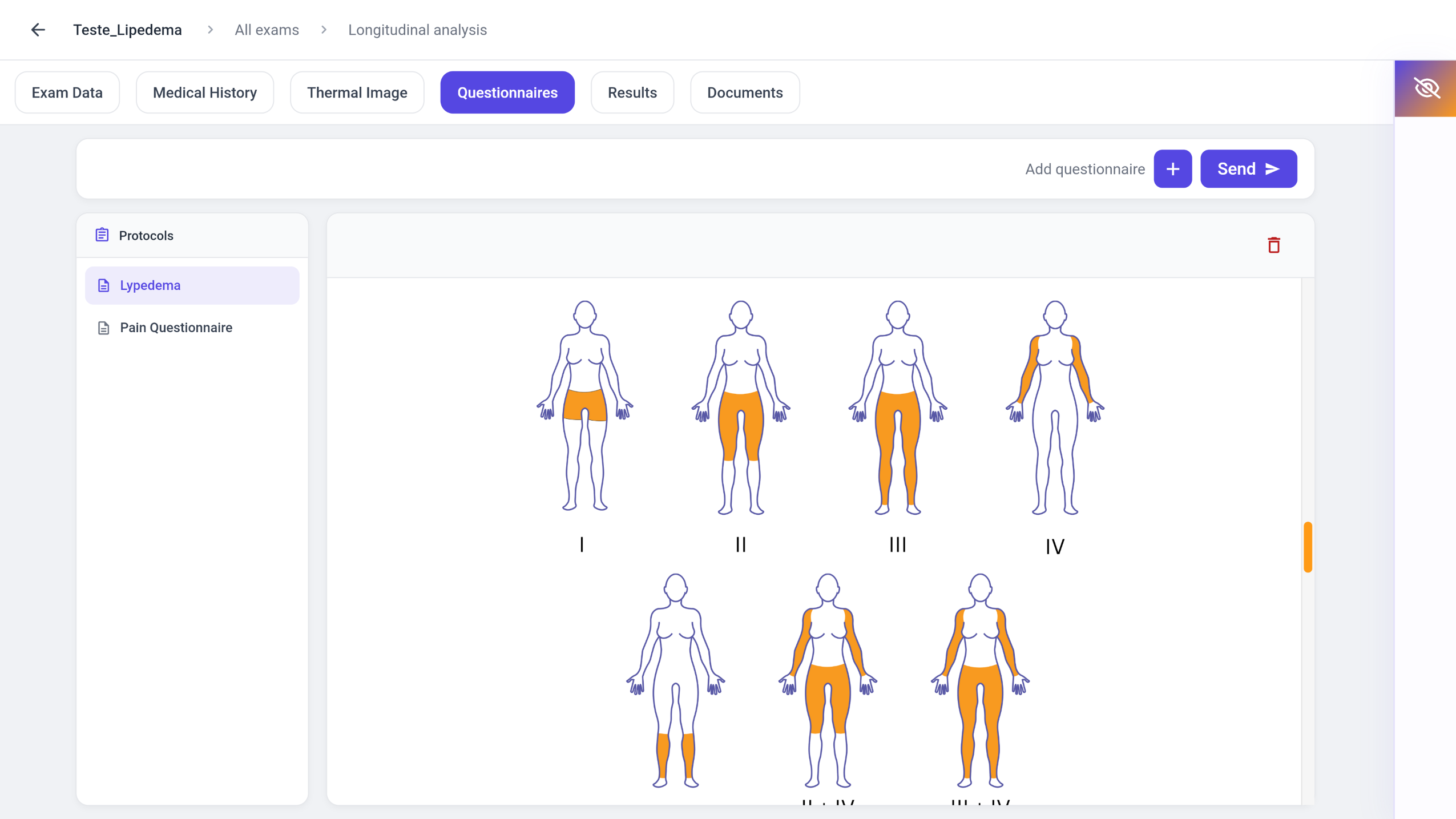
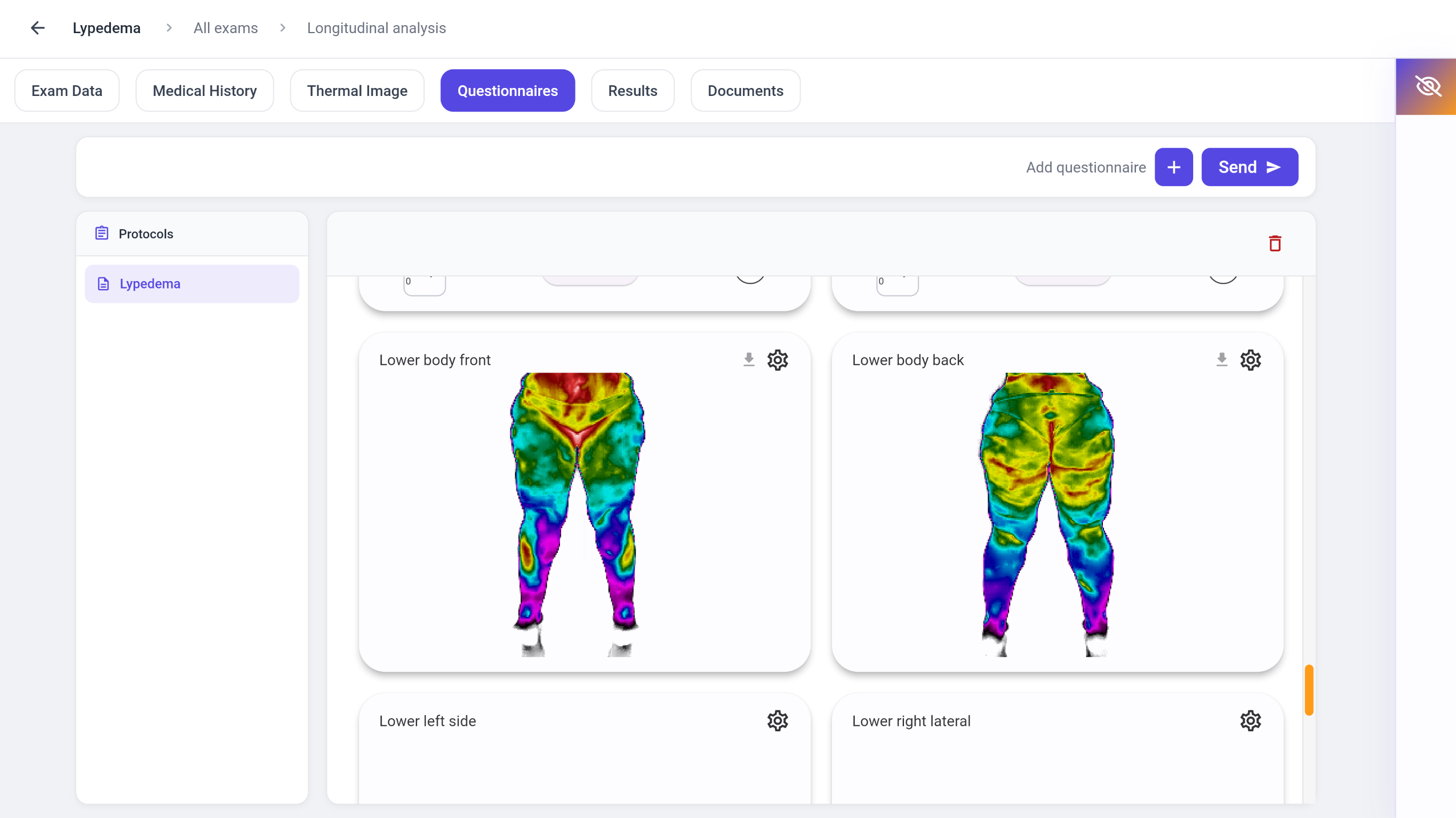
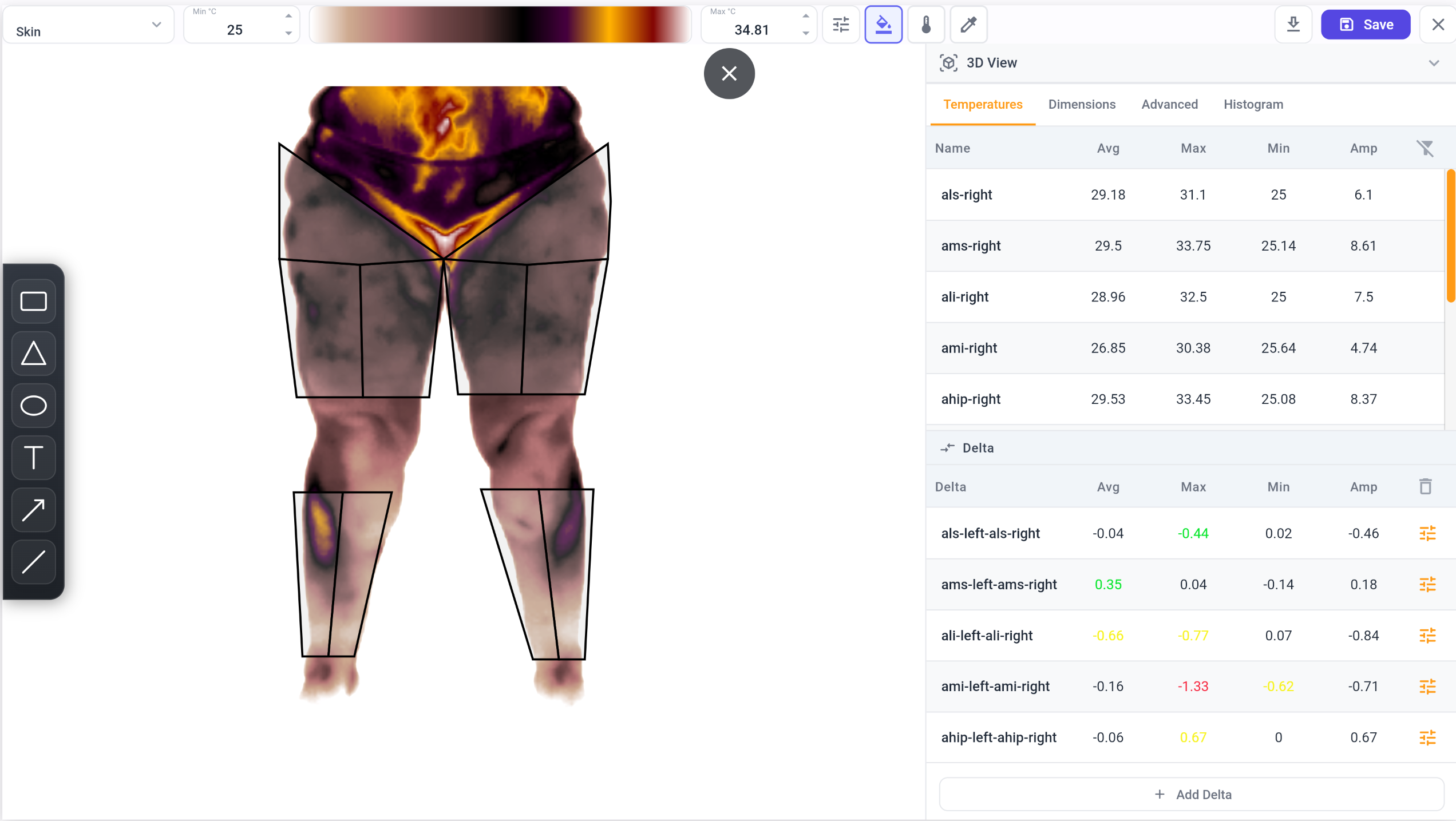
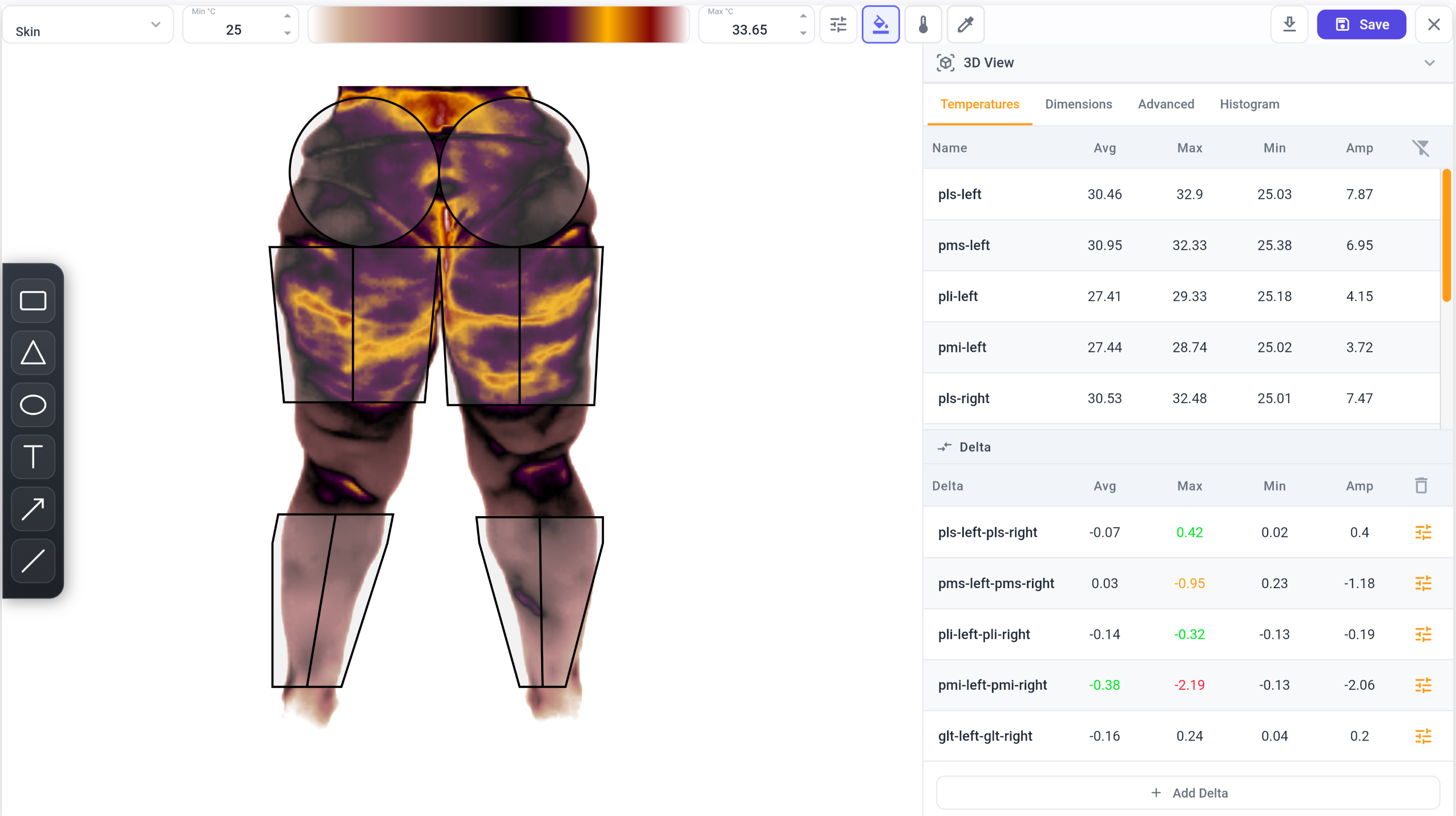
Vizbodx platform screenshots from a test exam, shown for illustrative purposes.
How the follow-up works
Four steps that fit the consultation you already run.
Baseline
A standardized thermal capture at the first assessment, establishing the reference point for every comparison that follows.
Clinical decision
You define the treatment from your own exam and assessment. The imaging enters as objective documentation, not as a diagnosis.
Reassessment
A new capture under the same protocol. The system presents thermal variation per region relative to the baseline.
Documented decision
Hold, adjust or intensify — backed by visual evidence that supports the choice in the chart and in the conversation with your patient.
What this changes in your practice
Simple integration that doesn't disturb what already works.
No radiation, no contact
A 100% non-invasive, painless assessment. No contrast agents, no ionizing radiation, no discomfort for the patient.
Five minutes per assessment
Complete capture of every region of interest in under 5 minutes, inside the appointment you already have booked.
A comparable history
Each patient builds a series of assessments under the same protocol — the history that lets you discuss progression objectively.
Treatment adherence
Seeing their own progress is what keeps patients on the therapeutic plan month after month.