A patient walks into the clinic with a painful shoulder. The MRI is done. Tendinopathy — confirmed. Case closed, right?
Not quite. When Dr. João Leite, CMO at Vizbodx, performed an infrared thermography exam, something didn't add up. The shoulder wasn't hot. There was no inflammation. The thermal image told a completely different story than the diagnosis printed on paper.
What happened next is exactly why we built Vizbodx — and why infrared thermography combined with AI analysis is changing how clinicians approach pain.
The Clinical Puzzle: A "Confirmed" Diagnosis That Didn't Match
Shoulder tendinopathy is one of the most common musculoskeletal diagnoses. An MRI shows structural changes in the tendon, and the case appears straightforward. But here's the problem that many clinicians encounter: structural findings on imaging don't always correlate with the actual source of pain.
Research consistently shows this disconnect. Studies have found that approximately 24% of patients diagnosed with shoulder impingement syndrome show evidence of cervical radiculopathy on electrodiagnostic testing — meaning the pain generator is in the neck, not the shoulder. In fact, about 1 in 25 patients presenting to a specialist for shoulder or neck pain is ultimately found to have pathology in the other region.
The reason? The nerves originating from C5, C6, and C7 in the cervical spine innervate the shoulder girdle and arm. Compression at these spinal levels can refer pain directly to the shoulder, perfectly mimicking rotator cuff disorders, bursitis, or adhesive capsulitis.
An MRI of the shoulder would show exactly what you'd expect to find in any aging joint — degenerative changes, minor tendon fraying — and confirm a diagnosis that may have nothing to do with the actual pain.
What Thermography Revealed: No Heat, No Inflammation
When Dr. João ran an infrared thermography exam on the patient's shoulder, the thermal map showed something unexpected: the shoulder was cold.
In inflammatory conditions like active tendinopathy, you'd expect to see elevated surface temperatures over the affected area — the thermal signature of increased blood flow and metabolic activity. Instead, the thermal image showed no hyperthermic pattern at all.
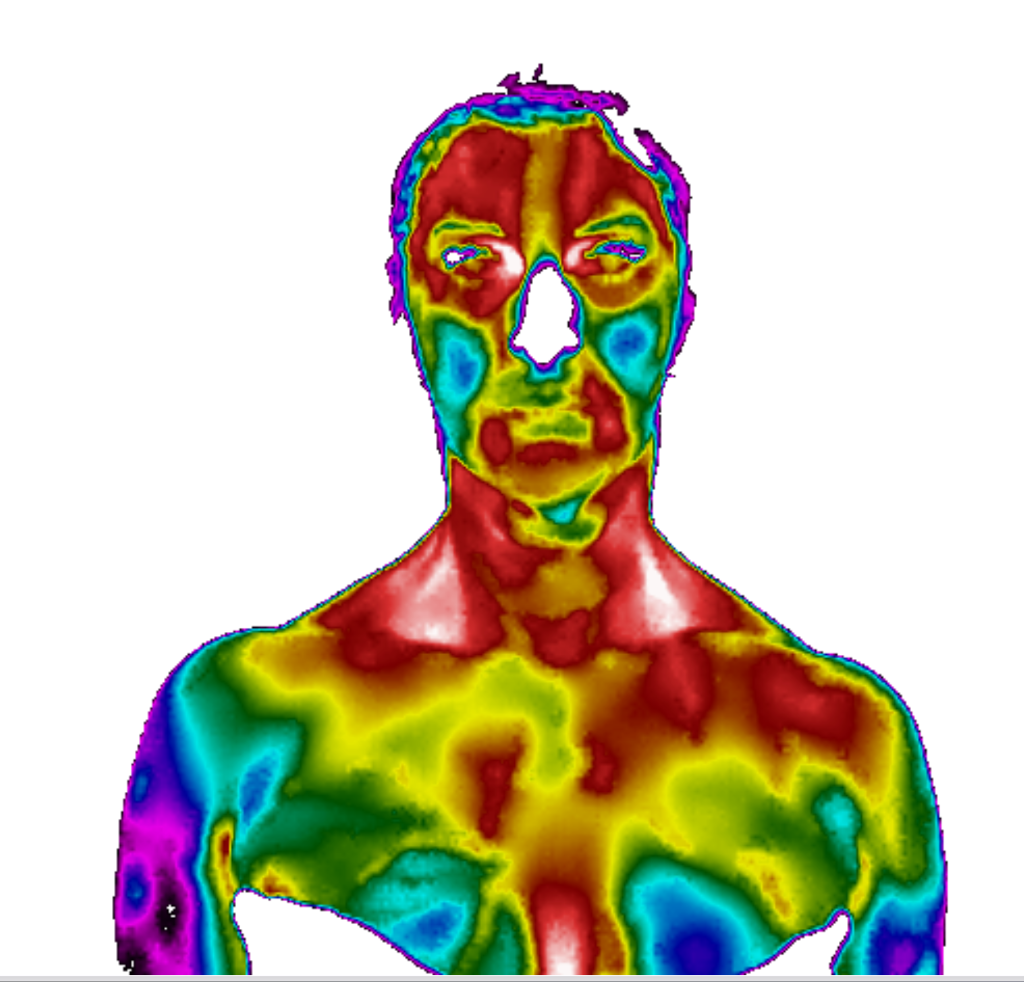
This is where infrared thermography provides a fundamentally different type of information than structural imaging. While MRI shows anatomy (tendons, ligaments, discs), thermography shows physiology — the real-time functional state of tissues. A cold shoulder in the context of reported pain is a significant clinical signal:
- No active inflammatory process at the site of reported pain
- Possible neurogenic or vascular origin — neuropathic pain often presents with hypothermic or asymmetric thermal patterns
- A mismatch between structure and function — the anatomy looks abnormal, but the physiology says "look elsewhere"
This is the kind of insight that can redirect a clinical investigation before unnecessary treatments are pursued.
The AI Layer: From Thermal Data to Actionable Insight
Raw thermal images contain enormous amounts of data — temperature gradients across hundreds of anatomical regions, bilateral asymmetries, pattern distributions. Interpreting all of this manually is time-consuming and subject to variability between practitioners.
This is where the Vizbodx AI-generated report stepped in.
The platform's machine learning algorithms analyzed the thermal data and surfaced a clear insight: this pain likely isn't originating from the shoulder. The thermal pattern suggests a neuropathic origin — look to the cervical spine.
How the AI Analysis Works
Vizbodx uses AI to automatically:
- Identify anatomical regions of interest (ROIs) across the thermal image
- Quantify bilateral temperature asymmetries — differences greater than 1°C between corresponding body regions are clinically significant
- Cross-reference thermal patterns with known pathological signatures, including inflammatory, neuropathic, and vascular profiles
- Generate a structured report that highlights findings and suggests clinical correlations
The result isn't a diagnosis — it's a deeper layer of clinical visibility that complements the physician's judgment. In this case, it pointed directly to what the MRI couldn't see: the pain was traveling from the cervical spine to the shoulder through compressed nerve roots.
AI-powered thermal analysis is emerging as one of the most practical clinical applications of artificial intelligence. Studies from 2024–2025 show 85–95% accuracy in AI-assisted thermographic classification across musculoskeletal and inflammatory conditions.
The Resolution: A Nerve Block That Solved Everything
Armed with the thermographic insight and AI analysis, Dr. João performed an ultrasound-guided nerve block at C5, C6, and C7 under local anesthesia.
The pain resolved.
No shoulder surgery. No rotator cuff repair. No weeks of physical therapy targeting the wrong structure. A targeted intervention at the actual pain generator — the compressed cervical nerve roots — eliminated the symptom entirely.
What Would Have Happened Without Thermography?
Without the additional layer of thermal imaging, the most likely clinical path would have been:
- Conservative treatment — physical therapy focused on the shoulder (addressing the wrong target)
- Corticosteroid injections — into the shoulder joint or subacromial space (temporary relief at best, since the pain generator is in the cervical spine)
- Surgical referral — if conservative measures fail, shoulder surgery becomes the next step, operating on a structure that was never the actual problem
Each of these represents wasted time, unnecessary cost, and continued patient suffering — all because the structural finding on MRI was accepted as the definitive answer.
Why Traditional Imaging Alone Isn't Enough
The gap between structural imaging and functional reality is one of the most underappreciated problems in pain medicine.
MRI, CT, and X-ray excel at showing anatomy — torn tendons, herniated discs, fractured bones. But pain is a functional phenomenon. A disc bulge visible on MRI may be completely asymptomatic. A shoulder that looks perfect on imaging may be the source of debilitating pain.
Infrared thermography fills this gap by adding a physiological dimension to the clinical picture:
- MRI shows structural anatomy (tendons, ligaments, discs) but cannot confirm a structure is actively generating pain
- X-ray / CT shows bone structure, fractures, and alignment but provides no soft tissue or functional information
- Thermography shows surface temperature and physiological activity but requires clinical interpretation and does not show deep anatomy
- Thermography + AI reveals physiological patterns with automated analysis and classification, serving as an adjunctive tool that complements clinical judgment
The strongest clinical approach combines both: structural imaging to understand anatomy and functional imaging to understand physiology. When the two tell different stories — as in this case — the clinician has the information needed to investigate further rather than proceed with a potentially incorrect treatment plan.
The Bigger Picture: Why We Built Vizbodx
This case isn't an anomaly. It's a pattern we see regularly in clinical practice.
Vizbodx was built on a simple principle: clinicians deserve better visibility. Not to replace their judgment, but to give them an additional layer of objective, quantifiable data that traditional exams can't provide.
The platform is designed for healthcare professionals who want to:
- Add a functional imaging layer to their diagnostic workflow
- Leverage AI to extract insights from complex thermal data in seconds
- Track physiological changes over time — comparing thermal exams across visits to monitor treatment response
- Work with any infrared camera — Vizbodx is compatible with a wide range of thermal sensors
Medical infrared thermography is non-invasive, radiation-free, and fast. Combined with AI, it becomes a practical tool that fits into real clinical workflows without adding complexity.
FAQ
What is medical infrared thermography?
Medical infrared thermography (IRT) is a non-invasive imaging technique that captures the heat emitted by the body's surface. It creates a thermal map showing temperature distribution across anatomical regions, revealing physiological changes like inflammation, nerve dysfunction, or vascular abnormalities that structural imaging may miss.
Can thermography replace MRI or other imaging?
No. Thermography is a complementary tool, not a replacement. It shows physiological function (heat, blood flow, metabolic activity) while MRI shows structural anatomy. The two provide different and complementary information. The strongest diagnostic approach uses both together.
How does AI improve thermography accuracy?
AI algorithms automatically identify regions of interest, quantify bilateral temperature asymmetries, and cross-reference thermal patterns with known clinical signatures. This reduces interpretation variability, speeds up analysis, and can surface insights — like neuropathic pain patterns — that might be missed in manual review.
What is neuropathic pain and how does thermography detect it?
Neuropathic pain originates from nerve damage or dysfunction rather than tissue inflammation. Thermography can detect it through characteristic thermal patterns — often presenting as hypothermic (cold) zones or asymmetric temperature distributions in areas served by affected nerves, contrasting with the hyperthermic (hot) patterns seen in inflammatory conditions.
The Signal That Was Always There
A painful shoulder, a confirmed MRI finding, and a diagnosis that turned out to be wrong. Infrared thermography saw what structural imaging couldn't — the absence of inflammation where there should have been heat, pointing to a neuropathic origin in the cervical spine.
This is the clinical visibility that changes outcomes. Not replacing the physician's expertise, but giving them an objective, AI-powered layer of data that traditional exams don't provide.
Vizbodx Inc. is developing AI-powered infrared medical imaging technology designed to detect asymmetric thermal patterns in pain management, neuropathic assessment, and occupational health — often before symptoms have a conventional diagnosis to attach to.
Recovery begins with discovery.
→ Watch the original clinical case by Dr. João Leite on LinkedIn → Learn more about Vizbodx
References
- Leite J. Clinical case: shoulder tendinopathy misdiagnosis, neuropathic origin identified via infrared thermography. LinkedIn, 2026. https://www.linkedin.com/feed/update/urn:li:activity:7462882924867158017
- Studies on cervical radiculopathy and shoulder pain overlap: approximately 24% of shoulder impingement patients show cervical radiculopathy on electrodiagnostic testing.
- AI-assisted thermographic classification accuracy (85–95%) in musculoskeletal and inflammatory conditions. IEEE / MDPI, 2024–2025.