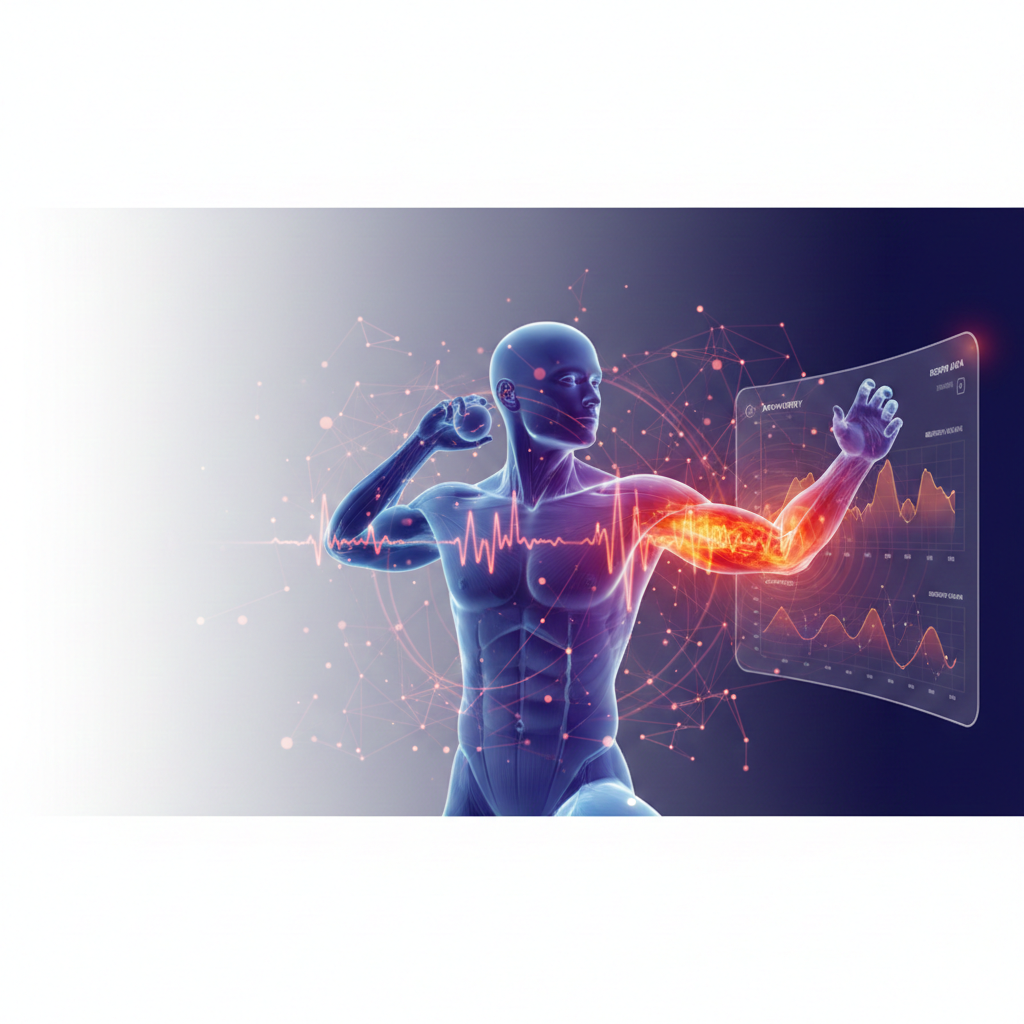
Every day, in training rooms across America, I try desperately to get someone's attention. I have a story to tell.
When that athlete pushes through practice, unaware that deep in the tissue of their hamstring something is breaking down, I respond immediately. "Emergency in progress," I call out — through increased blood flow, through elevated temperature, through thermal signatures rising to the surface of the skin.
Within minutes of injury, I dispatch my paramedics to the scene. Neutrophils arrive first, rapidly assessing the damage, clearing debris, fighting infection. Right behind them, I send my fire rescue teams. Macrophages — more experienced, more specialized — coordinating the cleanup and beginning the reconstruction.
I am working. Hard. But the athlete trains harder. I call louder. I rush blood and resources to the injured tissue, desperately trying to stabilize the situation.
And then, despite my best efforts, I am overwhelmed. The balance tips. What began as rescue becomes destruction. My capacity exhausted. The pulled muscle, the torn ligament, the season-ending catastrophe that I had been fighting to prevent for weeks — it arrives anyway.
The Signal Was Always There
Here is what you need to understand: I never hide.
From the moment tissue begins to break down, I announce myself. I send thermal signals to the surface of the skin — measurable, consistent, and detectable changes in temperature that map directly to what is happening beneath. I do this within minutes of the first cellular disruption. Not days later, when pain finally forces the athlete off the field. Minutes.
The signal exists. It always has. The problem is that no one has been equipped to read it.
Traditional clinical assessment waits for symptoms: pain, swelling, reduced range of motion. But by the time those symptoms appear, tissue damage may already be significant. The microtrauma has accumulated. The window for early intervention has closed.
I have been screaming into a room where no one speaks my language.
What It Looks Like When You Finally Listen
Imagine a pitcher in February, three weeks into spring training. He feels fine. He reports no pain. His coaches see nothing unusual in his mechanics.
But beneath the surface of his medial elbow, the UCL has been absorbing asymmetric stress with every pitch — stress that the surrounding forearm muscles, still deconditioned from the off-season, cannot adequately share.
I am already there. I have been there for days.
The thermal asymmetry between his throwing arm and his non-throwing arm is measurable. The pattern is not yet catastrophic — it is a whisper, not a scream. But it is a real, objective signal, readable by anyone who has the right tool and knows where to look.
Without that tool, the conversation between clinician and athlete sounds like this:
"How does your elbow feel?" "Fine."
That conversation ends there. I get no voice.
Earlier Detection Changes Everything
The promise of infrared medical imaging in sports medicine is not about replacing clinical judgment. It is about giving clinicians a new data layer — one that closes the gap between what the athlete reports and what the tissue is actually experiencing.
When thermal patterns are assessed serially — before, during, and after loading — they reveal:
- Asymmetric thermal responses that indicate one structure is bearing disproportionate stress
- Persistent elevation that suggests tissue has not recovered between sessions
- Unexpected cooling patterns that can point to compromised circulation or protective compensation
None of these findings require the athlete to feel pain. None of them depend on subjective reporting. They are objective thermal signatures — the language I have always been speaking, now finally translated.
Recovery Begins With Discovery
I am not the enemy. This is the part that gets lost when clinicians and coaches think about inflammation. I am not the damage — I am the response to damage. I am the system doing exactly what it was designed to do: detect a threat, mobilize resources, and begin repair.
The failure is not mine. The failure is in not listening.
When you can see me — when you can track the thermal signal in real time, across a training block, across a season — you can finally work with me instead of against me. You can adjust load before I am overwhelmed. You can intervene before the balance tips. You can give the athlete what they need before they know they need it.
Earlier detection. Smarter intervention. Reduced downstream risk.
That is what it looks like when someone finally asks: Who are you?
I am inflammation. And now you know the rest of the story.
Vizbodx Inc. is developing AI-powered infrared medical imaging technology designed to detect asymmetric thermal patterns in sports medicine, occupational health, and senior care — often before symptoms emerge.
Recovery begins with discovery.
→ Read the original LinkedIn post → Learn more about Vizbodx